One company, built three ways.
Foley Lawn Pros is not a real business. We invented it, right down to the 555 number, so we could build the same lawn company’s website three different times: the site a nephew built in 2009, the template site from 2019, and the site we would build today. Same crew, same trucks, same prices. Watch what changes.
The site that says you’ve closed.
Built in 2009, last touched in 2011, still the first thing Google shows for this company. Half of Baldwin County has one of these floating around.
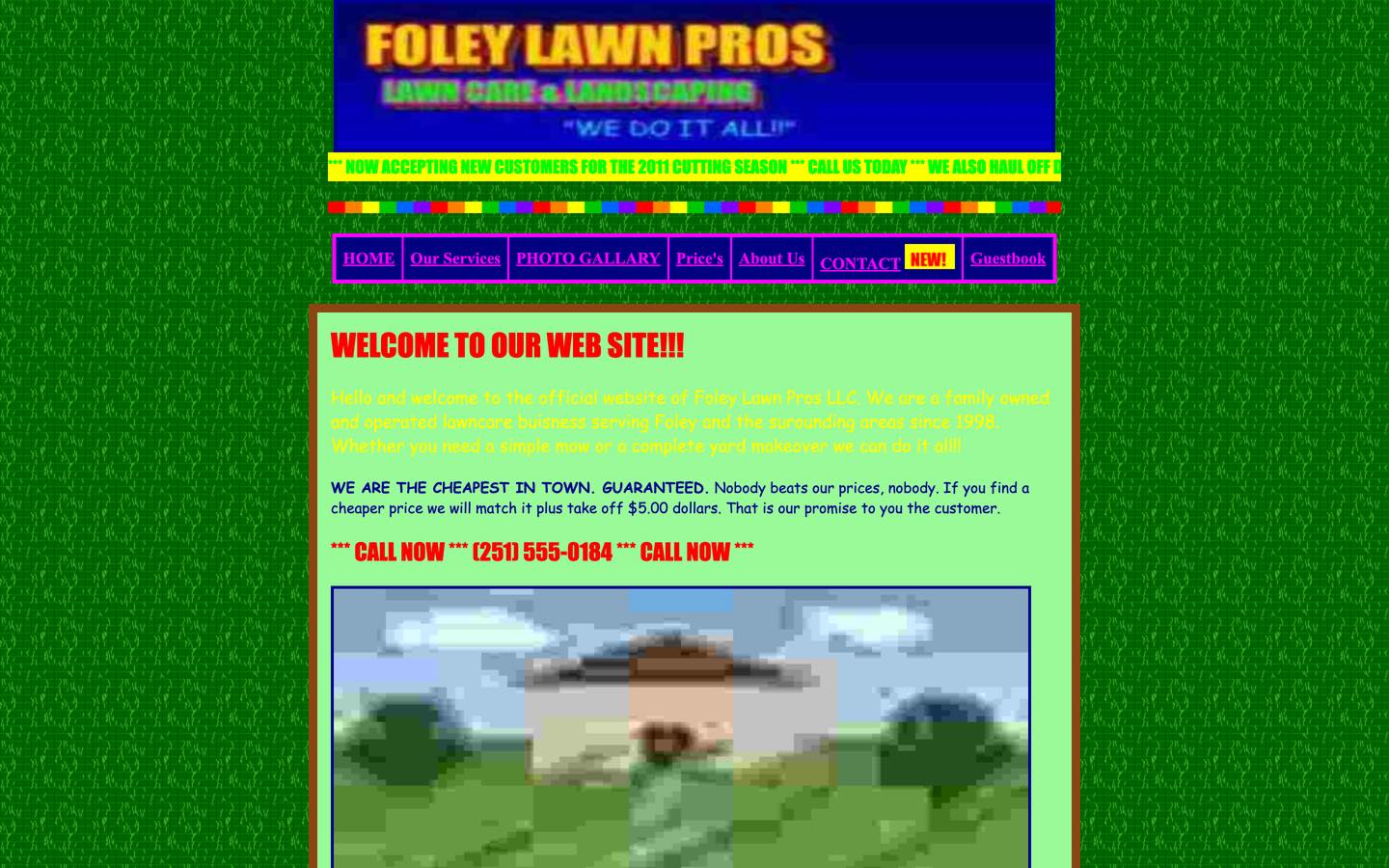
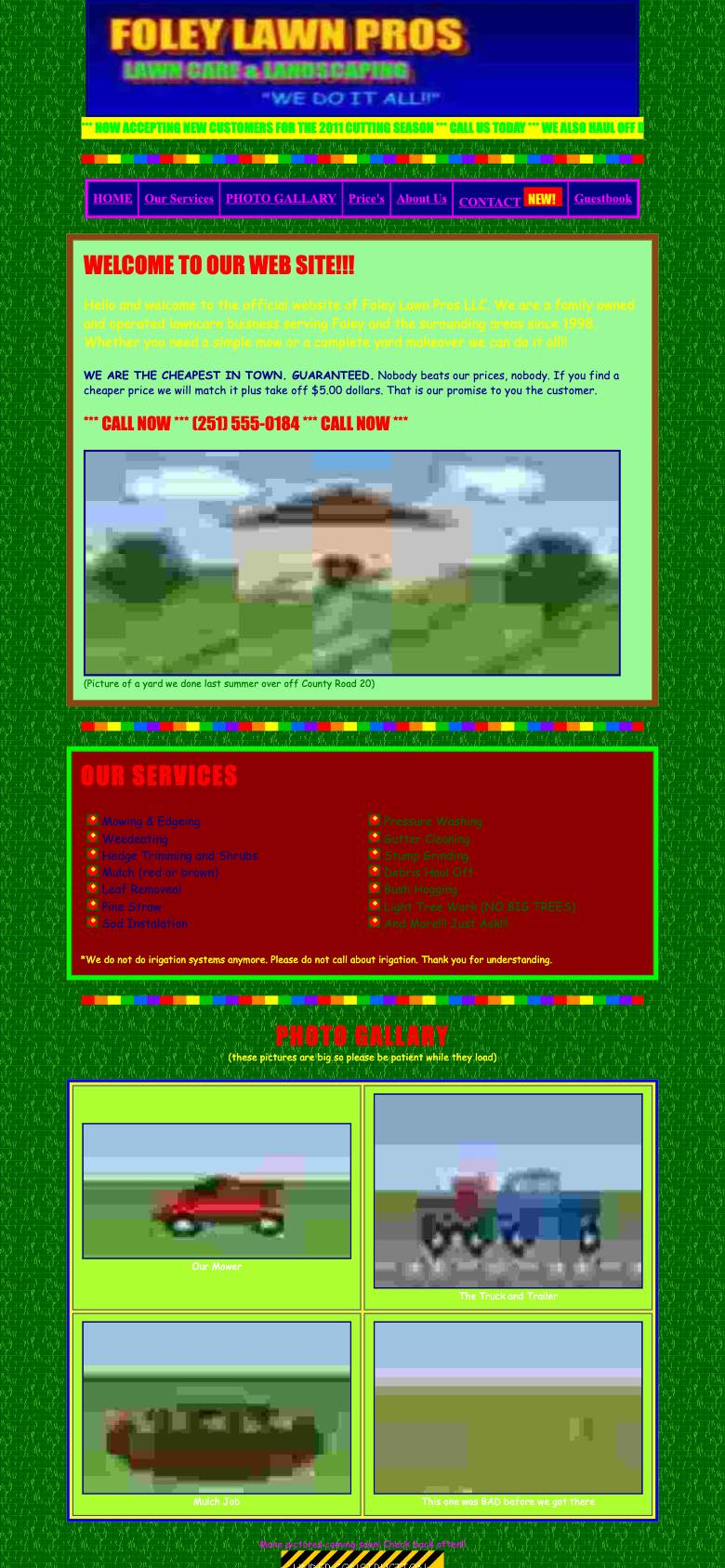
No phone layout at all. On a modern phone the whole page shrinks to postage-stamp size. Visitors pinch, zoom, squint and leave.
Copyright 2009, last updated 2011. To Google that reads abandoned. To a customer it reads out of business.
The estimate form doesn’t send, and admits it. The phone number blinks, but it can’t be tapped.
Three fonts, none readable. Yellow on light green, dark red on dark green, all of it on a tiled background.
Nobody lands here and thinks old website. They think is this place still open, and then they call somebody whose site says yes.
The site that says nothing.
The upgrade. Somebody paid a monthly builder subscription, picked a template and called it done. It looks fine in a thumbnail. That’s the trap.
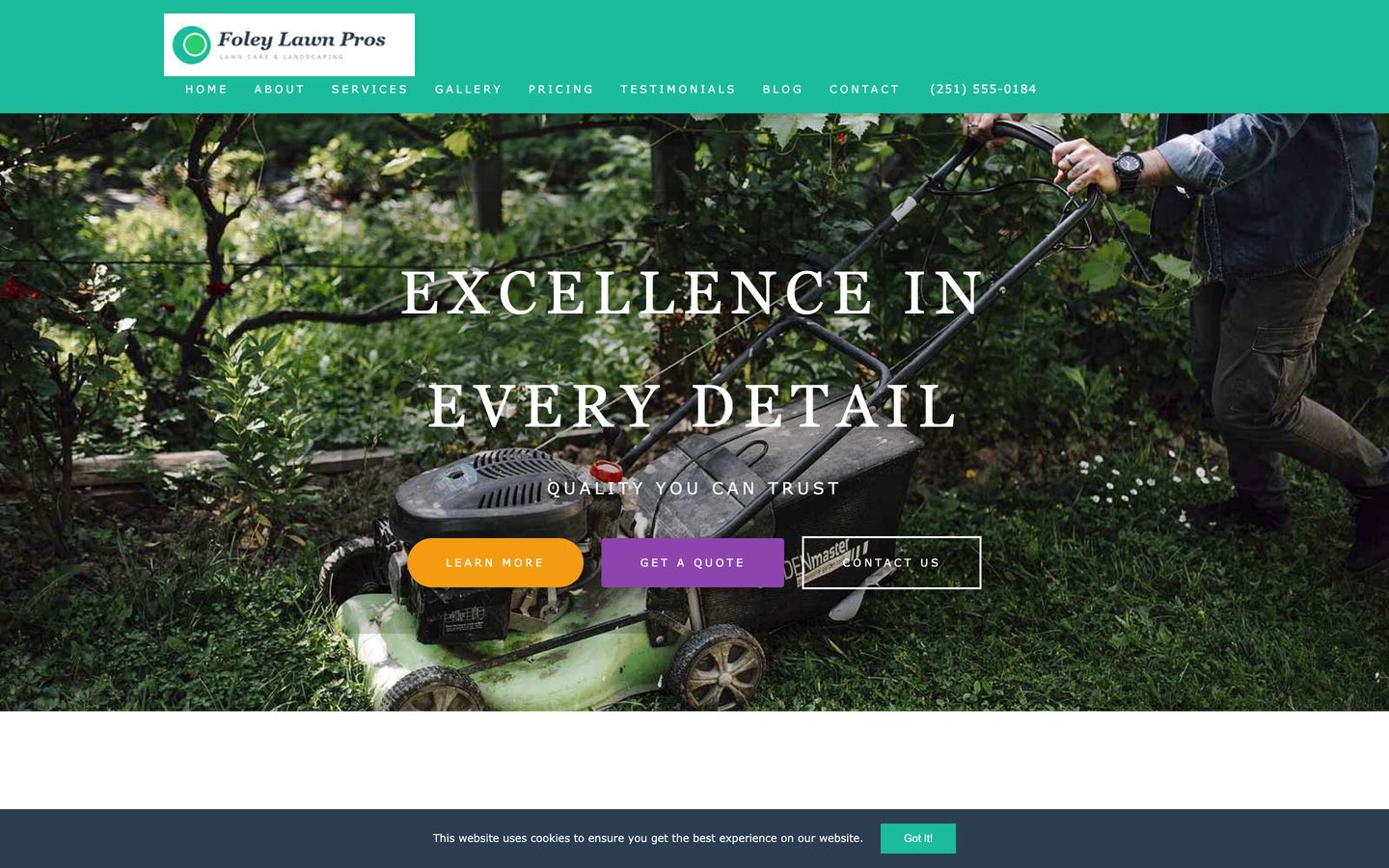

Broken on the phone in their hand. On a 390px screen the page runs 700px wide. A third of it hangs off the edge and the headline reads XCELLENC.
All three service blurbs are the same paragraph, word for word. Not one line names Foley or Baldwin County, so Google has nothing to rank.
Every price says contact us. Six learn more buttons, and every one of them goes nowhere.
The photos are an English estate with a lake. Customers can tell it’s not your work, and quietly wonder what else on the page isn’t true.
This one costs real money every month, and it still loses the customer. A site that says nothing makes people assume you’re hiding the price, and guessing at the rest.
A bad website can hurt you more than no website at all.
No website
The customer who hears your name asks around, checks Facebook, maybe still calls. You’re unproven, not rejected.
A bad website
They found you, looked, and decided against you. That’s not a missing customer. That’s a lost one.
All day, every day
Google keeps sending people to that page while you’re out working. It turns them away one by one, and you never hear about a single call.
The site that gets the phone ringing
Same fictional company, built the way we build for real clients: to answer the questions a customer actually has, on the phone in their hand.
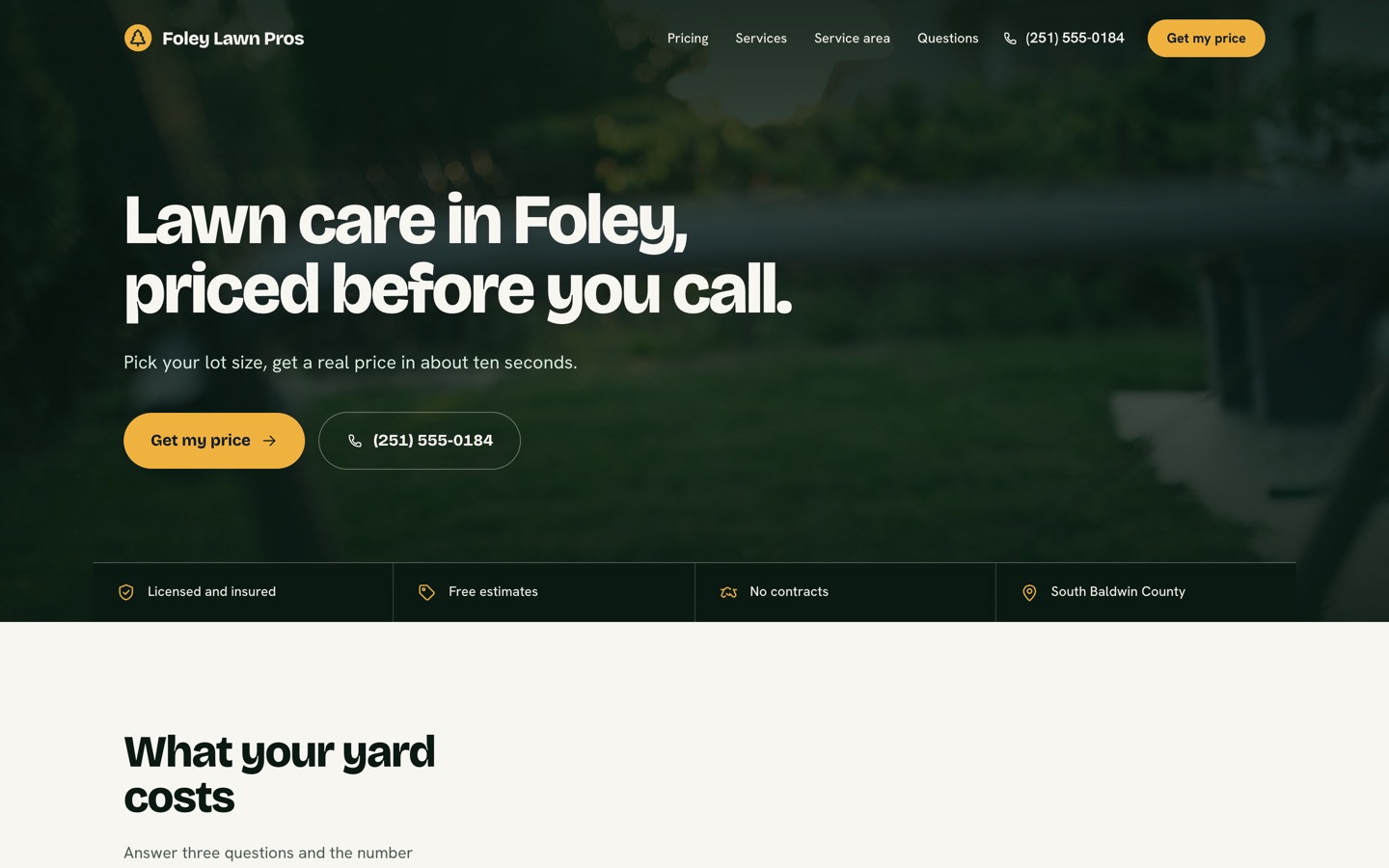
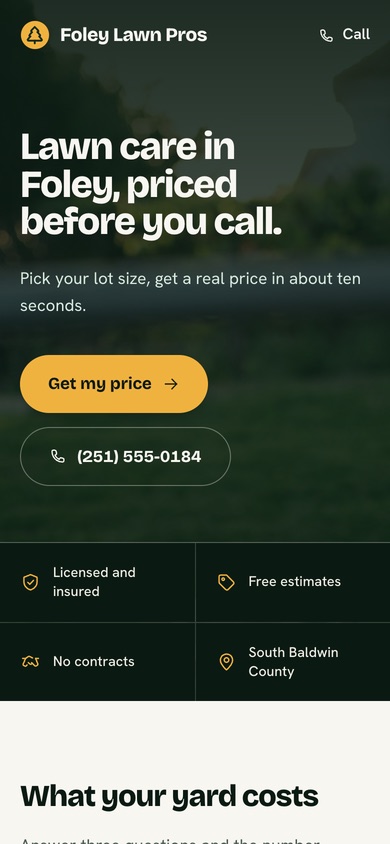
Real prices on the page. Pick a lot size and how often, and get a live range with a monthly figure before you ever call. The estimate rides along with the quote request.
Zero sideways scroll on a phone. Measured at 390px and at 1440px, not eyeballed.
Names twelve real Baldwin County towns on a drawn service-area map, so Google finally has something to rank.
A quote form that works, a proper thank-you page, and every phone number tappable.
Every question answered before it’s asked: what you do, where you do it, what it costs, and how to book it. That’s all a good website is.
“What does it cost to mow my lawn?”
It’s the one thing nearly every visitor came to find out. Here is how each site answers it.
A blinking phone number you can’t tap, and an estimate form that doesn’t send.
A pricing table with three rows. Every single row says contact us.
A live estimate from lot size and visit frequency, with a monthly figure under it. The lead arrives with the estimate attached.
YesNo
Which one is yours? We’ll tell you straight.
Send us your web address and we will give you a free, plain-English answer. If your site is doing its job, we’ll say so and leave you alone. If it’s costing you work, we’ll show you exactly where.
Foley Lawn Pros is a demonstration business we invented; the phone numbers and people on those pages are made up. All three websites are real builds, shown exactly as captured. Photography in the screenshots by Shixart1985 (CC BY 2.0) and Kenneth Allen (CC BY-SA 2.0), via Wikimedia Commons.